


Spanish Doctors Demand Fair Wages, Better Work Conditions
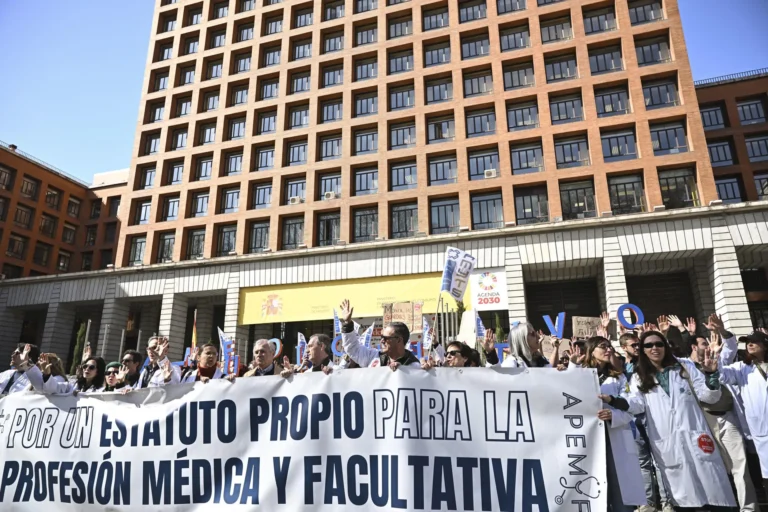
This is the second strike in less than a month, with calls from Monday to Friday throughout Spain. Photo: EFE.
March 19, 2026 Hour: 4:41 pm
🔗 Comparte este artículo
Hundreds of doctors across Spain launched their second nationwide strike in this month in Madrid, demanding reforms to the Framework Statute to combat severe burnout, low wages, and staff shortages in the public health system, which jeopardize patient safety.
Hundreds of doctors across Spain launched their second nationwide strike in less than a month, demanding a fundamental reform of the Framework Statute to address severe burnout, inadequate wages, and chronic staff shortages within the public health system.
This action highlights a growing crisis in Spain’s healthcare sector, impacting patient safety and the well-being of its essential workforce.
RELATED: Spain Condemns Israeli Lebanon’s Hospital Attack, “Unacceptable Violation”
For the second time in a single week, the Spanish medical professionals converged outside the Ministry of Health and the regional Health Council in Madrid, demanding a deep restructuring of the existing Framework Statute. They assert that the current agreement, negotiated with majority unions, fails to adequately recognize the true level of responsibility and the specific workload inherent to doctors within the public health system.
The mobilization, directed at both Isabel Díaz Ayuso’s regional administration in Madrid and Minister of Health Mónica García, underscores a profound sustainability crisis that jeopardizes the quality of care and the safety of patients nationwide. Doctors emphasize that the current conditions are not only unsustainable for them but also compromise their ability to provide optimal medical attention, creating a detrimental cycle of overwork and reduced service quality.
The doctors describe a system characterized by “assembly-line care”, a direct consequence of working conditions they deem unsuitable for a European Union member State. A primary grievance involves excessive working hours, routinely exceeding the 48-hour weekly limit often stipulated by European labor laws. This overload is largely attributed to persistent staff shortages, forcing existing personnel to cover extensive shifts and manage a disproportionate number of patients, leading to diminished quality of life.
Another critical point of contention is the mandatory 24-hour shifts that doctors must undertake until they reach the age of 55 years-old. This policy severely impedes work-life balance, making it challenging for professionals to reconcile their demanding careers with personal and family commitments. Doctors assured that the constant pressure of these long, grueling shifts results in widespread chronic fatigue and contributes significantly to the alarming rates of burnout reported among the medical community.
Furthermore, a significant salary gap persists between Spanish doctors and their counterparts in other major European nations, such as France or Germany. This disparity acts as a powerful incentive for skilled medical professionals to emigrate, seeking better economic opportunities and working conditions abroad. Consequently, Madrid’s health centers, and indeed those across the entire country, face descapitalization, losing experienced and qualified personnel crucial for maintaining a robust and effective public health system.
Medical unions are specifically calling for a distinct statute tailored exclusively to doctors, which would exclude them from the broader Framework Statute currently applied to all other healthcare professionals. This specialized statute would allow for specific recognition of their unique training, responsibilities, and workload.
Doctors and medical unions emphasize the urgency of their demands, highlighting the long-term implications for Spain’s public health system if their calls for reform are not adequately addressed.
The future of healthcare delivery and the stability of the medical workforce in Spain hinge on a resolution that effectively tackles these critical issues.
Author: Laura V. Mor
Source: Agencies